- How do Sontag and Shambu characterise cinephilia? (Think about the kind of language they use, as well as the kinds of practices they describe)
Sontag and Shambu seem to be at the opposite side of the same spectrum. Sontag’s view on the future of film culture and cinephilia is fatalistic. She looks back with nostalgia to the time when the fervent cinephilic dialogue was at the core of the French youth and the moviegoers’ routines in the 60’s and 70’s. She praises the immersive feeling of being inside a movie theatre among strangers and how this is slowly disappearing due to the widespread of television and commodities. She states that film lovers with a broad taste and extensive knowledge of film history and geography do not exist anymore and that cinema itself died with them. Sontag wrote this article in 1996 before the Internet changed the industry forever.
Shambu responds to Sontag’s absolutist approach in The New Cinephilia. He doesn’t share the same negative views on the disappearance of cinephiles. Indeed, he articulates how the advent of the Internet created an exciting platform of film dialogue and film writing, where amateur film lovers exchange passionate ideas, opinions, reviews on a daily basis via brief Tweets, pondered Facebook post, Tumblr still images and gifs, video essay, podcasts, film blogs and website from all of the world. According to Shambu, the Internet rekindled the enthusiasm for the Seventh Art.
Sontag’s idea of cinephilia is quite conservative and idealistic, whereas Shambu underlines the sociability of cinephilia and how this is increasing in recent times.
- How has digital technology affected cinephilia? Note specific changes and trends, drawing on all three readings if possible.
Sontag is adverse towards new technologies. She believes that the advent of modern home comforts, such as widescreen television, discourage the vast majority of people to go to the movie theatre.
Shambu divides the cinematic experience in “there” and “elsewhere”. “There” is the material film, the visual images unfolding onscreen. “Elsewhere” is the response to those images, the reflection, discussion, theorisation of the memory of the film. In the past, film critics and film lovers had to rely only on their memories and feelings from that single screening, which could have been often unreliable. The widespread availability of films online made it possible to revisit those images frequently and carefully at the viewer’s own pace. Writing or as Agnes Varda said “cinecriture” has always been a fundamental element of film culture, since Lang, followed by the members of the Nouvelle Vague. Writing helps to rekindle the memories of films and impress those images in the writer’s head. He then explores how writing itself took different forms on different online platforms (blogs, posts, pictures, video essay, Twitter, Facebook, Tumblr etc.) and question what makes a writer.
Hagener quotes Shambu on the dichotomy of materiality and immateriality of films. Films work both as products and as a service. Hagener focuses more on the access to movies and how this can be problematic in the era of digital networks. He deconstructs the myth of availability, by analysis three new, different access to film in the Internet age.
First, he analyses the free of charge websites like Youtube, Vimeo and Dailymotion and all the legal implications involving copyrights and territoriality, as well as, emphasising on how platforms like Youtube praises the mainstream over the less popular content. Secondly, he examines the entanglements relate to streaming service as Netflix, Mubi, Hulu and Amazon Prime. Hagener compares Netflix and Mubi different approach. In order to avoid the red tape associated with global distribution and copyright, Netflix started producing its original content. Whereas Mubi (previously Auteurs), is a curated streaming service focus on arthouse films, classic and small under-distributed gems from around the world, which ingeniously eliminate the paradox of choice, by showing each film available for only 30 days. Another case study Hagener takes into consideration is Ubuweb, a curated website devoted to avant-garde art which is not commercial, where is the online community to provide the content. The third access to watch film online is by downloading and streaming film illegally.
- Which of the three readings seems most ‘academic’ to you, and why? (Think about the kind of language and terms used, but also things like structure, use of evidence and approach to research).
Sontag’s writing style is poetic, passionate and absolutist. It feels more like a requiem to film lovers than an academic text. It’s clear that it’s a subject close to her heart. She doesn’t support her views with case studies and counter-arguments. She shares how she feels. I found the reading was compelling but biased and conservative in some ways.
Shambu’s approach is more pondered and supported with clear examples. However, he still discusses his personal views and experience through the text.
Hagener’s writing is easily the more academic of the three. Supported by numerous case studies, Hagener takes in consideration economic, legal, historical and geographical implications. His analysis is extremely objective, and his vocabulary is specific.
- Few words about Climax
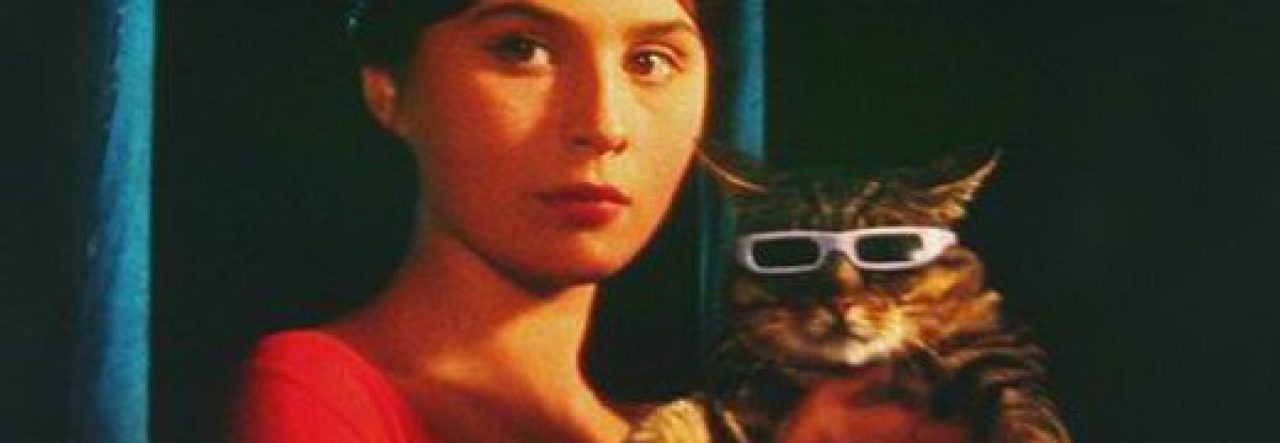
As in Irreversible, the movie opens with its final credits. We see from above a woman covered in blood writhing in the snow. It is a clear warning. It almost seems as if Noé is asking the audience if they feel ready for the ride.
He then voyeuristically introduces us to the characters through the screen of an old square television, where a series of interviews are playing. Dozens of books and videotapes are laying on the shelves around this tv, where Noé meticulously positioned his favourite inspirations which foreshadow what will happen next. Among his collection of tapes, where arthouse meets exploitation horror, we can see Argento, Zulanski, Fulci, Fassbinder, Pasolini and others “naughty boys” of the Seventh Art.
All these influences are recognisable, but Noé makes them his own and creates something flawed, but genuinely unique and avant-garde. We can quickly notice the bright reds from Suspiria and the orgiastic and sadistic tone from Salò. One scene, in particular, feels like rewatching Isabelle Adjani going ballistic in the underground sequence in Possession. During an extremely long take, the camera follows Sofia Boutella ‘s character having a severe mental breakdown which translates into a sort of dance performance. Nothing particularly gory or violent happens, but the scene remains an incredibly disturbing and unsettling display.
Noé’s camera work is extraordinary, especially during the second half of the film when the LSD kicks in and the nightmare begins. Noé immediately sets a voyeuristic tone to his creation. It feels like an ominous sadistic (or indifferent) presence is there with these decadent dancers enjoying the show. A significant part of that hallucinatory inferno is shot in one take, pushing the immersive power of filmmaking to its extreme. He tries to convey the same nauseating sense of disorientation that the characters feel, by continuously moving the camera from all angles.
Often criticised for being more exercises in style than meaningful pieces of art, Noé’s films fail to show much substance behind their shock for shock sake. Whereas this might be the case or not, Noé is one of the few filmmakers working today whose work has no bindings. Even the linear structure is too much of constriction for him and an excuse to provoke his audience (final credits first, beginning credits halfway through and the title at the very climatic end).
If there is something Noé struggles with it is creating the characters. In Climax, in particular, they all feel empty and shallow (which was probably his intention), and I couldn’t care less if they all die or not in the end. The first half of the party, when we witness the characters talking into couples about all sort of obscenities, felt tedious and overlong.
 Film Criticism and Cinephilia
Good summary of Sontag and Shambu’s perspectives on cinephilia. I particularly liked the way you saw them as being at opposite ends of a spectrum, and recognised that Sontag was writing before the transformative impact of the internet. You also did well to pick up on Sontag’s nostalgic tone.
Your evaluation of which piece is most ‘academic’ is excellent: you’ve shown strong awareness of the different styles of writing and the ways in which they use evidence (or not) to support their points.
The second answer picks up on a range of relevant ideas and shows good engagement. Rather than writing about each reading in turn though, it would have worked better to use the paragraphing to foreground particular trends and changes (e.g., a paragraph on accessing films online, drawing on both Shambu and Hagener at the same time).
LikeLike